
Portal Survivor
ESC Games Yazılım A.Ş.Action
4.730.00 Reviews
- Version
- 3.7.0
- Installs
- 50.00K
- Age Rating
- Everyone
Screenshots
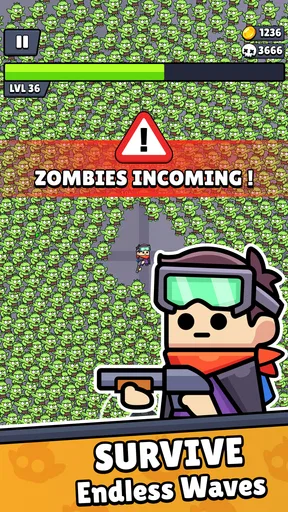
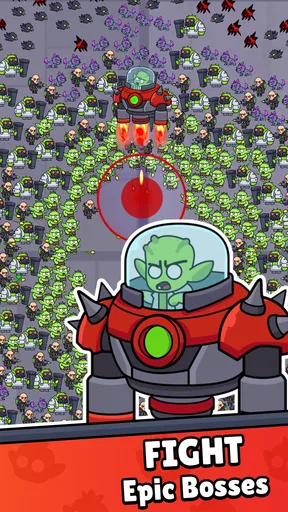
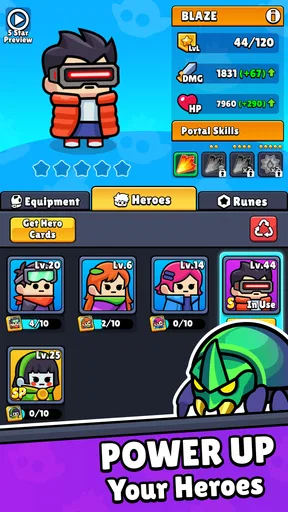
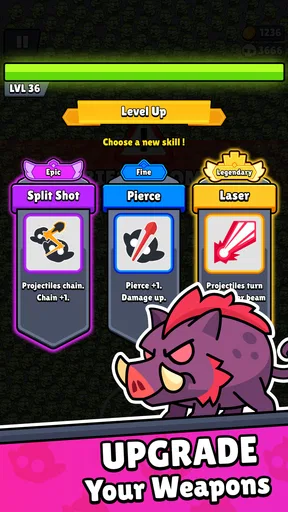
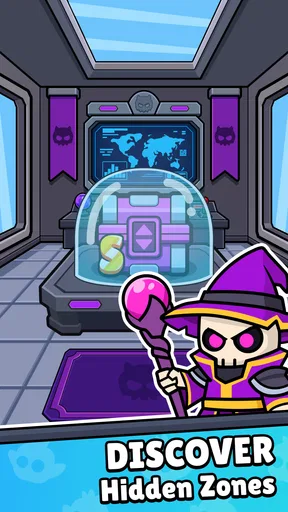
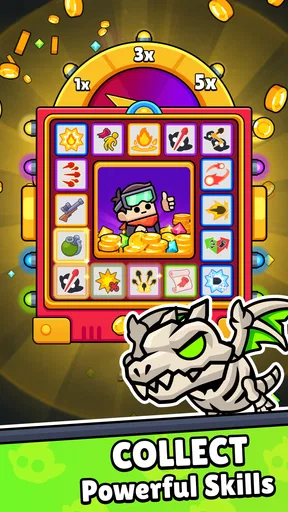
Our Review of Portal Survivor
 Analysis by Appyee
I approached Portal Survivor as the kind of action game that can fill a short break without demanding a long commitment. Its premise is easy to understand: move through escalating battles, survive waves of enemies, and make quick choices while the screen becomes increasingly dangerous. That simplicity makes it appealing on a shared phone or tablet, especially when different people in a household want something they can pick up and understand quickly.
After spending time with it, my impression is that the game works best as a focused solo challenge rather than a social or family-management tool. It is a free action game from ESC Games Yazılım A.Ş., rated 4.7 from around 530 ratings, with more than 50 thousand installs. Those figures suggest a healthy early audience, but they do not replace the more important question: whether its fast roguelite structure suits the way you actually play.
How Portal Survivor fits into a shared household
The most realistic use case is a shared device that moves between people during the day. One person might play for a few minutes while waiting for dinner, another might try a run after school, and someone else may use the same phone later in the evening. Because each session is built around immediate action rather than a complicated story setup, a new player can usually understand the basic objective without needing a long explanation from the previous user.
That convenience comes with an important boundary: I would treat the game as a personal activity on a shared device, not as a built-in family competition. The experience is centered on the individual run, so household members need to agree on whose turn it is and when the device is available. That sounds obvious, but it matters more in an action game than in a slower puzzle title because interrupting a run can waste progress and create unnecessary arguments.
A simple routine works well. Before starting, I would say who is playing, how long the session should last, and whether the device needs to remain available for calls or schoolwork. This is not a feature of the game; it is a practical habit for shared use. The short-session nature makes that arrangement manageable, provided players are willing to stop at a sensible point instead of treating every run as something that must continue indefinitely.
I also found that the game is easier to share when each person has a clear personal goal. One player may care about surviving longer, while another may enjoy experimenting with different combat choices. That difference reduces the pressure to compare every result. It also helps younger players understand that a failed run is part of the format rather than evidence that another household member is simply better.
What the first session feels like
The opening appeal is speed. Portal Survivor puts the emphasis on movement, reaction, and handling pressure from groups of enemies. I did not come to it for a deep narrative or a slow tutorial-driven campaign. I came to it for the repeated tension of entering a dangerous situation, making decisions under pressure, and seeing whether the next attempt would go better.
That structure is familiar to anyone who has tried a roguelite action game, but the familiar format still has value when it is executed cleanly. Each run encourages you to pay attention to what went wrong. Maybe you moved too aggressively, failed to create space, or chose an upgrade that looked useful but did not match the danger developing around you. The lesson is not always obvious immediately, which gives repeat attempts their purpose.
For a first-time player, I recommend treating the first few runs as practice rather than judging the game by immediate success. Fast action can make early mistakes feel random, particularly on a small phone screen. Once you start watching enemy movement and planning where you want room to escape, the action feels less like frantic tapping and more like controlled risk management.
The game is also a reasonable choice for people who prefer action without a large installation commitment or an elaborate world to learn. It is available free of charge, and its content rating is Everyone, which makes it easier to consider for a mixed-age household. Still, an age label should not be confused with a promise that every child will enjoy the pace. Some younger players may find repeated failure exciting; others may find the constant pressure tiring.
Setting boundaries before handing over the device
One detail parents and shared-device owners should consider is the presence of in-app purchases. Individual items range from $0.99 to $99.99, so I would not hand the device to a child with unrestricted purchasing access. The sensible approach is to keep purchases behind the device’s existing account protections and agree in advance that any transaction requires permission.
This is especially important because free action games can encourage “one more run” thinking. A player who has just failed may feel motivated to continue immediately, and that emotional momentum is exactly when an impulsive purchase can seem attractive. I would separate play time from spending decisions: finish the session, discuss whether anything is genuinely useful, and only then consider a purchase through the normal account holder.
That boundary also matters when several people use one device. If the phone belongs to an adult but is regularly borrowed by children, the account holder should make it clear that the game is not an open invitation to use stored payment details. The game can remain free to start while the household still treats optional spending as an adult decision.
Another useful boundary is progress ownership. I would avoid assuming that every person using the same installation has a separate run history or personal space unless the game clearly presents that option during use. On a shared device, agree on whether the game belongs to one player, whether everyone takes turns with the same progress, or whether the device should be reserved for a single account. This prevents disappointment when someone expects a private record and discovers that the household has been using the same game environment.
Coordination matters more than the action suggests
Although the battles are individual, the household experience still benefits from coordination. A player who is interrupted during an intense section may not be able to pause at a convenient moment. For that reason, I would avoid starting a run when another person needs the phone immediately afterward. A quick handover is easier after a natural stopping point than in the middle of a crowded encounter.
This is also where the game differs from a casual board or word game. With those alternatives, another family member can often join directly or inspect the state of play without affecting the outcome. Portal Survivor is more personal: watching can be entertaining, but the person holding the device remains responsible for movement and decisions. If you want a genuinely collaborative household game, a title designed around shared turns or cooperative play may be a better fit.
On the other hand, the solo structure can reduce conflict for families who do not want everyone playing at once. There is no need to coordinate a full team or match schedules. One person plays, then explains what happened, and the next person can try their own approach. I like that arrangement for short breaks because it creates conversation without requiring the game itself to support multiplayer interaction.
A practical tip is to use observation as part of the learning process. If a younger player is struggling, an older sibling or parent can watch one attempt and point out patterns rather than taking over the device. For example, discussing when to move away from danger or when not to chase an enemy teaches transferable decision-making while preserving the player’s control. That is more satisfying than simply winning a run on someone else’s behalf.
There is also a useful trade-off between speed and accessibility. Fast action keeps experienced players engaged, but it gives less time for a new player to think. If your household includes people with very different gaming backgrounds, set expectations accordingly. The experienced player may enjoy optimizing choices, while the beginner may need several relaxed attempts before the same screen stops feeling overwhelming.
Age, trust, and the right kind of supervision
The Everyone rating makes Portal Survivor approachable for a broad audience, but supervision decisions should still depend on the individual player. I would feel more comfortable with independent play when the person using the device understands the purchase boundary, can stop without becoming upset, and knows how to ask for help when the action becomes confusing.
For younger children, the main issue is not the basic premise but the combination of repetition and optional spending. A child may enjoy the bright, immediate action while having difficulty recognizing when a purchase is real money. That is why I would explain the difference between playing for free and buying an optional item before the first session, rather than waiting until a payment prompt appears.
Trust also includes respecting other people’s progress and device time. If several household members use the same installation, players should not erase or alter anything that another person values without asking. The game’s appeal comes from repeated attempts, so a failed run is normal; deliberately interfering with another player’s progress is a separate issue. A short conversation about ownership can prevent more frustration than any tutorial.
I would also avoid presenting the game as a test of patience for children who dislike repeated failure. The roguelite format naturally asks players to learn through unsuccessful attempts. That can build persistence for some people, but it can feel punishing to others. If someone consistently leaves the game angry rather than interested in trying a different approach, a calmer action title or a puzzle game may be a healthier choice for that particular player.
For adults, the same warning takes a different form. A free game with optional purchases can be perfectly reasonable, but the upper end of the item range deserves attention. I would review the device’s purchase settings before installing it on a family tablet, especially if multiple people know the account password. This is a household responsibility rather than a criticism of the combat design, but it directly affects whether the game remains a low-cost pastime.
Where it stands beside familiar action alternatives
Compared with a conventional level-based action game, Portal Survivor feels more replay-oriented. You are not simply moving through a fixed sequence and waiting for the next chapter. The appeal lies in adapting during each attempt and using failure as information. That makes it more suitable for players who enjoy experimentation than for someone seeking a carefully paced story with a definite ending.
Compared with an endless runner, it offers a different kind of attention. An endless runner often emphasizes lane changes, timing, and chasing a high score through a predictable rhythm. Here, the pressure comes from managing a hostile screen and deciding how to survive when several threats compete for your attention. If you prefer direct control and tactical movement, this is likely the more interesting option; if you want something almost automatic and easy to play one-handed, an endless runner may be less demanding.
It also differs from a traditional arcade shooter. Arcade games can reward memorized patterns and immediate reflexes, while a roguelite structure encourages you to think about choices across attempts. That gives Portal Survivor more staying power for me, but it also means the game may feel less satisfying to someone who wants a clean, predictable score chase with no build experimentation.
Against multiplayer action games, its advantage is convenience. You do not need to wait for teammates, coordinate a match, or worry about another player’s connection. The cost is social depth: there is no substitute for genuine cooperation when what you want is a shared team objective. I would choose this game for a solo break and choose a multiplayer alternative for a planned group session.
The current version is 3.7.0, and the game requires Android 6.0 or later. That makes it accessible on a wide range of Android devices, although compatibility alone does not guarantee an equally comfortable experience on every screen. On a smaller phone, crowded action can demand more concentration; on a larger display, movement and enemy positioning may be easier to read. I would test the controls during a free session before deciding whether it belongs on a shared family tablet.
Three ways to get more from each run
My first practical tip is to study the direction of danger before committing to an attack. New players often focus on the nearest enemy and move toward whatever looks immediately vulnerable. In a crowded encounter, that can close off the escape route. I found it more useful to preserve open space first and attack second, particularly when several threats begin approaching from different sides.
Second, do not judge every choice by its immediate damage. A selection that improves survival, positioning, or room to maneuver may be more valuable than one that produces a larger number right away. This is one of the game’s important trade-offs: short-term power can feel satisfying, but a safer option may keep the run alive long enough to matter.
Third, after a failed attempt, change one decision rather than everything at once. If you alter your movement, your upgrade priorities, and your risk level simultaneously, it becomes difficult to know what actually helped. Keeping one part of your approach stable turns each run into a small experiment. That method is especially useful when introducing the game to a child, because it makes improvement visible instead of making success feel mysterious.
A fourth habit helps on shared devices: announce when you are entering a serious attempt. That gives other people a chance to wait rather than interrupting at the worst moment. It may sound like a minor courtesy, but it matches the game’s design better than treating every tap as disposable. The result is less frustration and a clearer separation between casual testing and a run you genuinely want to complete.
Who should play it, and who should skip it
I would recommend Portal Survivor to players who enjoy fast solo action, repeated attempts, and learning from mistakes. It is a good match for someone who wants a game that can begin quickly, offers pressure from the first moments, and does not require a household to organize a multiplayer session. It also suits an adult who wants to share a device with family members while keeping the actual play experience turn-based in practice.
I would be more cautious about recommending it to someone looking for a strong narrative, a relaxed pace, or a clearly cooperative family activity. The action can become demanding, and the repeated-run structure may not appeal to players who prefer permanent, predictable progress. It is also not my first choice for a child who cannot yet understand purchase boundaries, even though the age rating is Everyone.
Players who dislike optional spending should not assume that the free entry point tells the whole household story. You can approach the game without paying, but the available purchase range means account settings deserve attention. If your priority is a completely frictionless free experience with no need to discuss transactions, a paid game with no in-app purchases may be a better household choice.
Likewise, if you want a game that two people can enjoy simultaneously, look elsewhere. Portal Survivor can create conversation and friendly comparison, but that is different from built-in cooperation. Its strength is the focused individual run, not shared control or a coordinated team campaign.
My household verdict
After considering both the action and the shared-device realities, I see Portal Survivor as a capable choice for short, personal sessions in a busy household. Its fast roguelite format gives each attempt a reason to exist, and the free starting point makes it easy to try before deciding whether it deserves regular space on the device. The 4.7 average is encouraging, while the modest audience size suggests I would still make the decision based on fit rather than popularity alone.
My recommendation is to install it when the household can agree on three things: who owns the progress, when the device is available, and who can approve purchases. Those boundaries matter more than they might in a simple offline puzzle because the game encourages repeated attempts and can hold attention through escalating action.
For adults and older children who enjoy quick reactions and thoughtful risk-taking, it can become a satisfying shared-device rotation: one person plays, another watches, and everyone compares approaches afterward. For younger players, I would introduce it with clear spending rules and occasional supervision. For families seeking a true group game, I would choose a cooperative alternative instead.
Overall, Portal Survivor earns my recommendation as a focused action game, not as an all-purpose family title. Its best quality is the way it turns a short break into a meaningful attempt, while its main limitations are the pressure of the combat, the lack of a genuinely shared play structure, and the need for sensible purchase boundaries. If those conditions suit your household, it is worth trying; if they do not, another genre will probably serve you better.
Verdict
Strengths of Portal Survivor
- Simple controls make it easy to start playing immediately.
- Short runs fit well into quick gaming sessions.
- Character upgrades provide a satisfying sense of progression.
- The survival format creates tense, fast-paced encounters.
- Playable offline in many situations, depending on the version.
Limitations of Portal Survivor
- Repeated runs can feel similar after extended play.
- The screen may become crowded during intense enemy waves.
- Progression can slow down without investing significant playtime.
- Some upgrades may feel unbalanced between characters or weapons.
- Ads or in-app purchases may interrupt the overall experience.
Similar Picks in This Category
View All
Temple Run 2: Endless Escape
Imangi Studios4.1

PUBG MOBILE
Level Infinite4.3

Free Fire: 9th Anniversary
GARENA INTERNATIONAL I4.4

Talking Tom: Hero Dash Run
Outfit7 Limited4.3

slither.io
Lowtech Studios3.9

Sniper 3D:Gun Shooting Games
Wildlife Studios4.6
Frequently Asked Questions
What is Portal Survivor, and how does the gameplay work?
Portal Survivor is an action-survival game built around fighting continuous waves of enemies while managing movement, attacks, upgrades, and portals. During a run, you typically collect experience or resources, improve your character’s abilities, and decide when to take risks for better rewards. The gameplay is easy to understand at first, but later stages require planning, quick reactions, and careful upgrade choices.
Is Portal Survivor free to download and play?
Portal Survivor can generally be downloaded without an upfront purchase, but availability and pricing may vary depending on whether you use Android or iOS. Like many free mobile games, it may include optional in-app purchases, advertisements, or paid items that speed up progress or provide additional resources. Before downloading, check the store listing for current purchase details and any regional differences.
Does Portal Survivor require an internet connection?
The basic combat experience in Portal Survivor may be playable without a constant internet connection, which is useful when you are travelling or have limited mobile data. However, online access can still be required for advertisements, cloud saves, account features, events, updates, leaderboards, or purchases. If offline play is important to you, test the game after installation and review its current store requirements.
Is Portal Survivor suitable for beginners and casual players?
Portal Survivor is relatively accessible for newcomers because its core controls and objective are straightforward: move, survive, defeat enemies, and strengthen your character. Nevertheless, the difficulty can increase as enemy waves become more demanding and available upgrades become more important. Casual players can enjoy short sessions, while experienced players may appreciate experimenting with different builds and replaying stages for improved results.
What devices are compatible with Portal Survivor, and does it take much storage?
Compatibility depends on the specific version of Portal Survivor and the operating system installed on your device. Before downloading, confirm the minimum Android or iOS version shown on the official store page. The initial download may not be very large, but additional files, updates, cached advertisements, and saved data can increase storage use. A stable device with free space is recommended for smoother performance.
Play our best games!


